
Research
Cerebral Palsy care set to change in New Zealand
27 Mar 2026
New Zealand will soon have a national research platform dedicated to cerebral palsy, thanks to a Neurological Foundation platform grant of nearly $1M. The platform is an evolution of the existing cerebral palsy register, shifting our health system from simply recording births to collecting genetic, MRI and long-term data – providing answers to families and opening doors to treatments during the critical early months of life.
By the Neurological Foundation
When a baby is diagnosed with cerebral palsy, the initial shock is often quickly followed by uncertainty. The condition is lifelong, there is no cure, and many parents are left wondering why it happened, or what the future may hold.
That is now beginning to change. A major new investment in cerebral palsy research, announced through the Neurological Foundation’s new Platform Grant initiative, will help ensure babies born with cerebral palsy in New Zealand are not left behind as advances in treatment emerge worldwide.
Bringing together clinicians and researchers from Starship Children’s Hospital, Capital, Coast and Hutt Valley, the University of Auckland’s Liggins Institute and the Cerebral Palsy Society of New Zealand, and in partnership with the Cerebral Palsy Alliance Australia, the platform aims to help families better understand why their baby has cerebral palsy, provide earlier diagnosis, and open the door to tailored treatments.
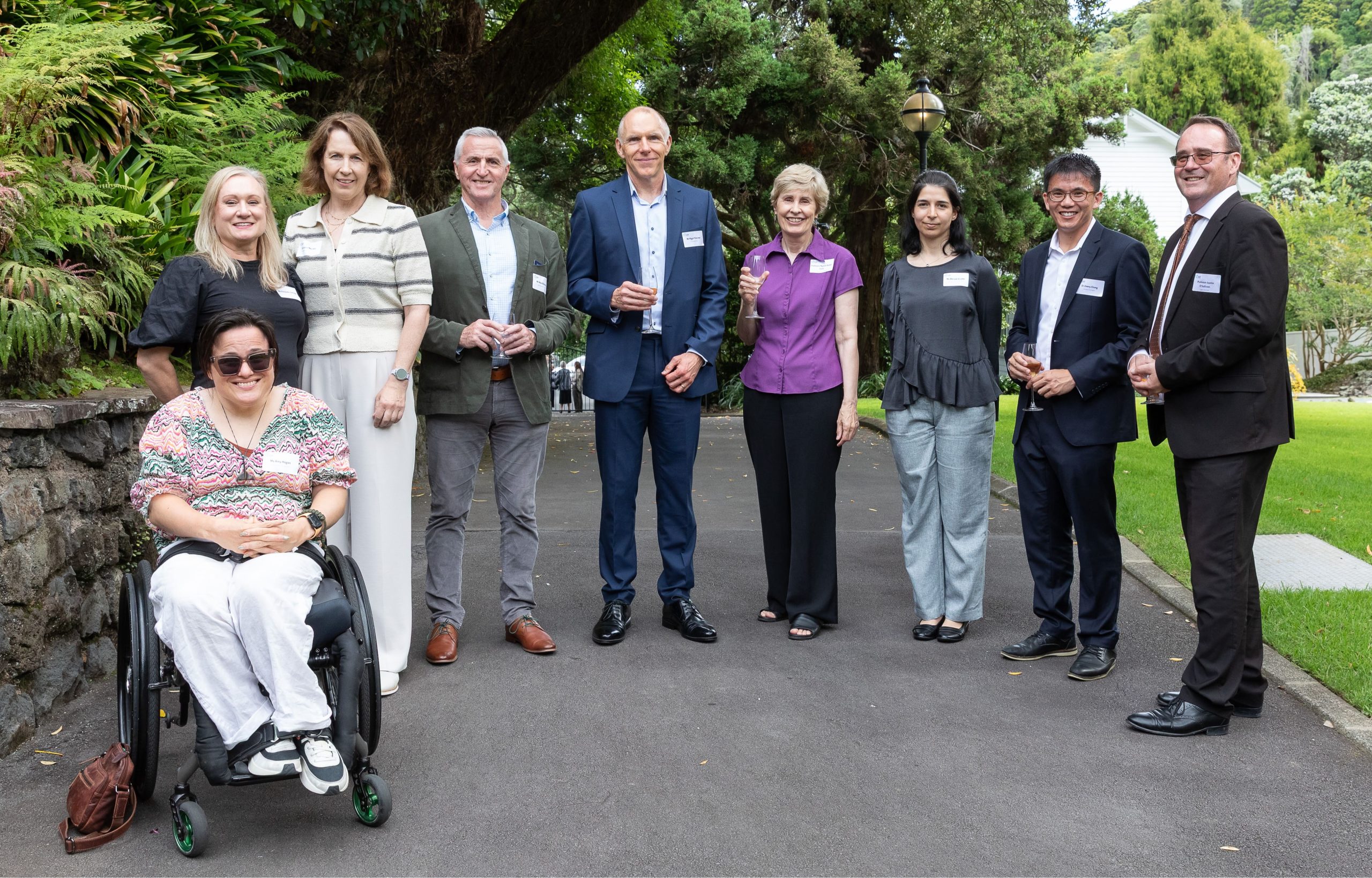
Some of the team behind the new cerebral palsy research platform. Left to right: Amy Hogan, Alexandra Sorhage, Dr Anna Mackey, Mike Bishop Nigel Fletcher, Prof Susan Stott, Woroud Alzaher, Dr Jimmy Chong, Prof Justin O’Sullivan.
“For many parents, knowing that something is not right, but not sure what, can feel like a nightmare,” says Professor Susan Stott, a paediatric orthopaedic surgeon at Starship Children’s Hospital, who brings decades of hands-on experience caring for babies and children with cerebral palsy into the design of the study.
“In cerebral palsy diagnoses, it has been very much a case of waiting and seeing, not making a diagnosis because of uncertainty, and therefore not knowing what the future holds,” Susan says, adding that the focus is now shifting towards early detection of babies at high risk of cerebral palsy.
Doctors diagnose cerebral palsy by observing patterns of movement, posture and development over time. The signs can be subtle early on and often become clearer as a baby grows.
There is currently no single blood test or genetic test that confirms cerebral palsy.
Once diagnosed, treatment typically focuses on managing symptoms – such as physiotherapy to support movement and development – rather than addressing the underlying drivers of the condition.
“It’s not helpful to tell parents their child has cerebral palsy without being able to explain why,” Susan says.
“Parents are constantly wondering whether their child will develop epilepsy, have hearing or vision problems, hip instability or a spinal curve – all things that can happen, but don’t happen to every child. Families may live with that uncertainty for years, waiting to see whether the next scan or X-ray will show a new problem,” she says.
“Knowing the reason for the cerebral palsy is another step towards predicting what might happen in the future and how best to detect and treat it early.”
While cerebral palsy is often linked to birth prematurity, or oxygen deprivation at birth, many babies with cerebral palsy have apparently normal births. A growing body of evidence suggests as many as 25 percent of cases may have a genetic origin.
With the average age of diagnosis sitting around two years, babies can miss out on valuable interventions during a critical window of neuroplasticity and physical growth, Susan explains.
“By the time you’re two-and-a-half, three, you’re almost half your adult height. So that’s a period of extremely rapid growth and acquisition of motor skills.
“Neurological damage is usually non-reversible, which makes early action critical to reduce the impact of disability over a lifetime.”
Since 2015, the New Zealand Cerebral Palsy Register has collected basic information on around 65 percent of cerebral palsy births. The new platform will significantly expand this, inviting families with a baby or child diagnosed with cerebral palsy to take part in studies involving genetic sequencing, MRI, and long-term follow-up, with the aim of covering 80 percent of the under-21 cerebral palsy population.
From there, the vision is to expand to babies at high risk of cerebral palsy, driving early detection and creating opportunities for early intervention.
Genetic sequencing for babies with cerebral palsy can’t yet always confirm if the cause is genetic. However, if it does turn out to be genetic, people with cerebral palsy could access a targeted therapy if one is developed in the future.
“This grant comes at a pivotal time, moving us from simply collecting health information to becoming a national research platform – building a deeper understanding of the condition over time, while also identifying which children may be suitable for emerging treatments, including early-stage clinical trials targeting genes,” says Susan.
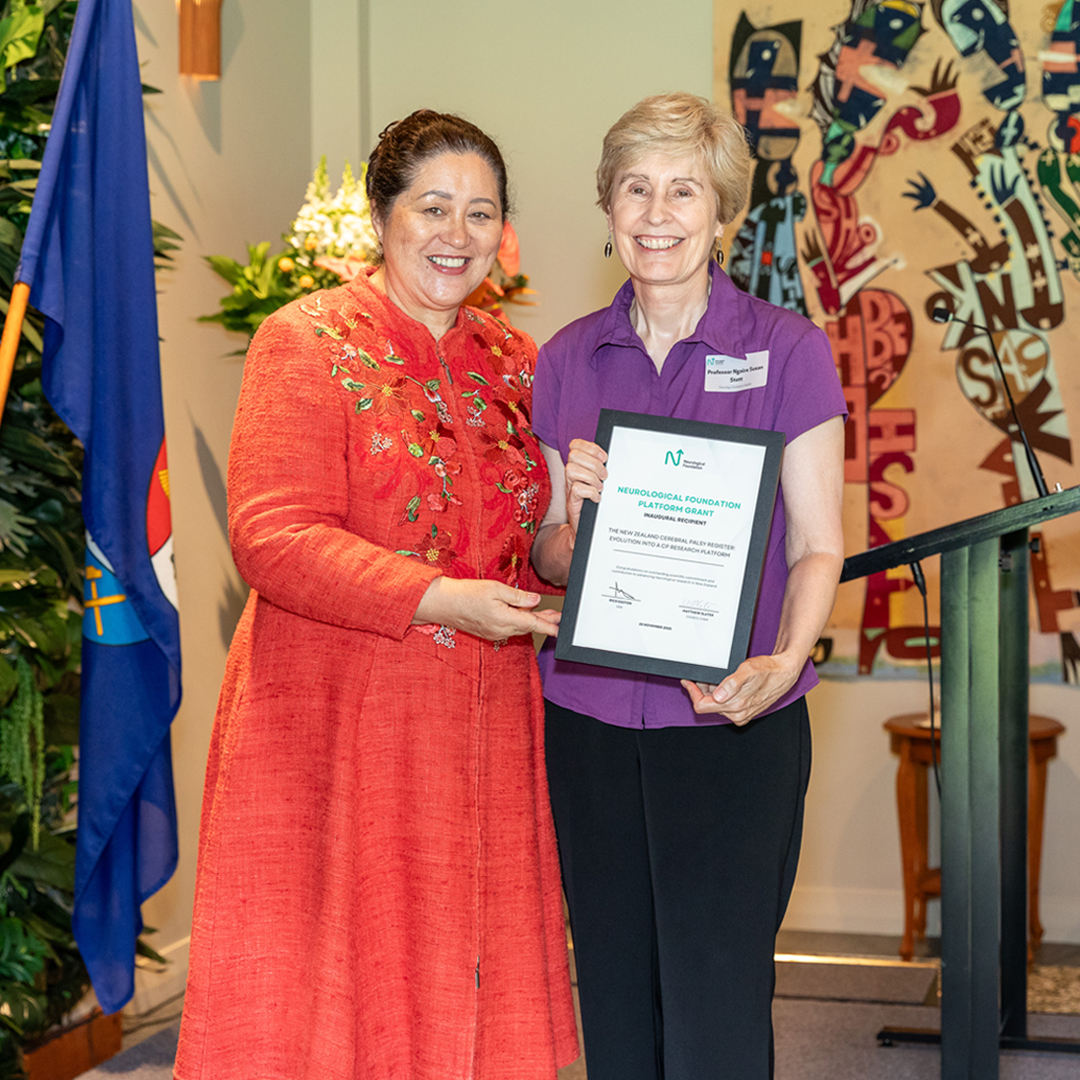
Professor Susan Stott, right, with NZ Governor-General and Neurological Foundation patron Rt Hon Dame Cindy Kiro.
Genetic sequencing will be led by Professor of Genomics Justin O’Sullivan, Director of the Liggins Institute, which specialises in the role of genetics, early life events and nutrition in babies’ developing brains.
In many cases, testing will involve parents as well as children, helping researchers interpret findings accurately.
“For years there’s been this dogma that cerebral palsy is an accident of birth,” Justin says. “But that’s hiding a whole lot of things that may actually be treatable or modifiable.”
In the case of cerebral palsy, it is estimated genetic factors may play a role in around 25 percent of cases, linked to approximately 250 different genes. Justin estimates that around eight percent of all cases could be genetically treatable.
“Some of those treatments might be quite simple, such as a nutritional intervention or repurposing an existing drug,” he says.
“These approaches have changed dramatically over the last few years, often in ways the public isn’t fully aware of yet. I think we’re going to see a surge in these advances reaching people with health conditions, and I hope that lifts the standard of care and has real impact.
“But we don’t know what we don’t know until we look,” he says. “And part of this project is finding the things we don’t yet understand.”
Justin says collecting data from babies born with cerebral palsy today may not benefit them immediately but could do so later in their lives. It could also provide critical insights that change the course of the condition for babies born years from now.
“These are long-term relationships with the potential to benefit communities for decades. That’s why we do science. This project is the start of a relationship that I hope lasts throughout my career and builds on the expertise of people who have worked in cerebral palsy for a long time.”
Susan points to a recent opportunity in Australia to join the world’s first gene therapy trial for a very rare, genetically-defined form of cerebral palsy.
“They asked whether we might have children in New Zealand with this mutation,” she says, “and the honest answer is – probably. But because we don’t routinely use genetic screening in cerebral palsy, we simply don’t know who they are, or how we would even find them,” says Susan.
“At the moment we’re aware of parents paying quite large sums of money to go to places like America or Australia to join clinical trials. And we think that’s a shame because we probably have everything we need to reproduce that trial in New Zealand.
“If we can identify a genetic cause, just being able to give that knowledge can be incredibly important for families.”
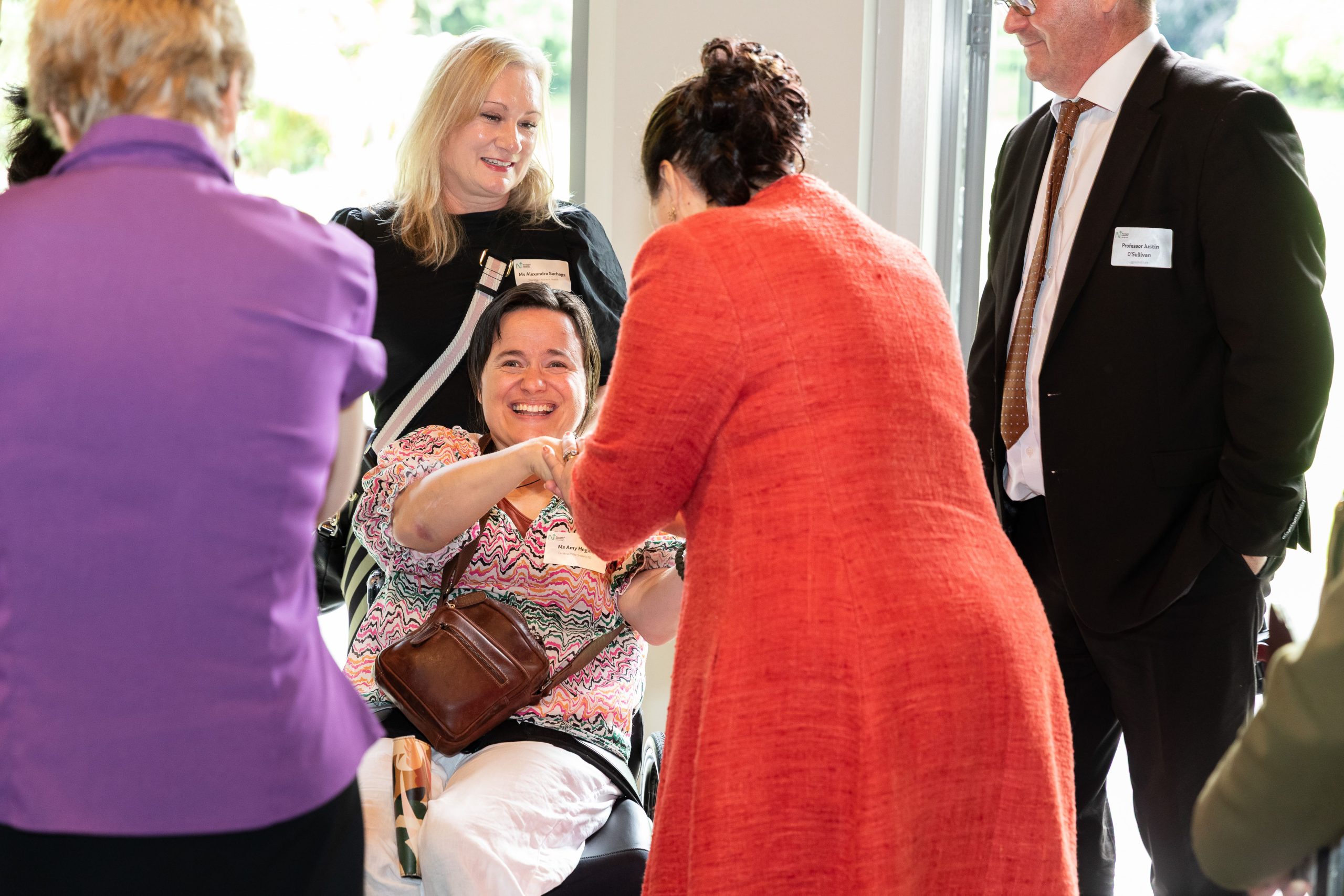
Amy Hogan, centre, from the Cerebral Palsy Society, and Alexandra Sorhage, a cerebral palsy researcher from Starship Children’s Hospital.
Alongside testing and collecting data, Susan emphasises that involving the cerebral palsy community is vital to ensure the research is responding to what families want.
“A lot of research in the past was done without really engaging with the disability community. We’re pleased to be working with Amy Hogan, a researcher at the Cerebral Palsy Society with lived experience, so we have a co-designed, co-produced approach to research.”
Amy Hogan was diagnosed with cerebral palsy at around two or three years old (circa 1988–89).
“My mum received a letter in the mail. It was traumatising for her,” Amy says.
Her experience living with cerebral palsy has been complex, lifelong, and affecting both big and small aspects of daily life – particularly mobility, stamina, and pain management.
“Making ‘everyday life’ possible often requires careful, precise planning and ongoing often invisible labour.”
Amy has built a career as a disability advocate, working to ensure the voices of people with cerebral palsy are reflected in research, services, and decision-making.
She says being involved in the project aligns her commitment to research guided by the disability community.
“We need more research and advocacy that reflects the broad spectrum of experiences and support needs, particularly beyond childhood, so that people with cerebral palsy are supported not just to survive, but to thrive across their lives,” Amy says.
“Having this scale of coordinated information in Aotearoa has previously felt unattainable, and it opens the door to better-informed decisions, earlier interventions, and more responsive systems of care.”
Reflecting on her own experience, Amy acknowledges that families and clinicians did the best they could with the knowledge and resources available at the time.
Since then, she says, there have been real improvements in how cerebral palsy is understood and communicated, including growing recognition that cerebral palsy is lifelong and affects people in many different ways.
“This funding represents a foundational step toward enabling New Zealanders with cerebral palsy to embody the te reo Māori concept associated with cerebral palsy: Hoki Nukurangi – to achieve what is important to you, through many different pathways,” says Amy.
“By strengthening the evidence base and centring lived experience, this work supports dignity, choice, and participation for individuals and whānau across Aotearoa.”
This article was originally published in the Neurological Foundation‘s magazine Headlines – autumn 2026 edition.