
NEWS & UPDATES
Supporting your health through adulthood with Cerebral Palsy
05 Oct 2026
Cerebral Palsy (CP) – Hōkai Nukurangi is caused by a non-progressive change or injury to the developing brain. This means the original brain injury does not worsen over time. However, our bodies, environments and everyday demands do change.
Some adults with CP notice changes in areas such as pain, fatigue, strength, balance or mobility as they grow older.

These experiences are sometimes described as “premature ageing”. However, this term does not provide a complete explanation of what is happening for every person.
Changes may be influenced by many interconnected factors, including the long-term physical demands of moving with CP, pain, reduced opportunities for physical activity, other health conditions, medication, stress, sleep, ageing or changes in a person’s environment and support.
The important thing is not to decide whether a change is “just Cerebral Palsy” or “just ageing”. It is to notice when something is new, increasing or beginning to affect your everyday life and to seek support where needed.
What changes might you notice?
Everyone’s experience when it comes to ageing is different. Changes may include:
- Increased pain, stiffness, spasms or muscle tightness
- Greater fatigue or needing longer to recover from activities
- Reduced strength, balance or confidence when moving
- More frequent falls or changes in walking, transfers or wheelchair use
- Changes in sleep, breathing, swallowing or communication
- Everyday activities, work or self-care requiring more energy
- Equipment, routines or support arrangements no longer working as well.
More than one change may happen at the same time. For example, pain may interrupt sleep, poor sleep may increase fatigue, and fatigue may make movement or daily activities more difficult. Looking at the whole picture can be more helpful than considering each symptom separately.
It’s also important to recognise that ageing with CP does not always mean that the changes are negative, or that there will be an inevitable decline that will always get worse. Instead, a growing number of studies and research suggest that there are many strategies that adults find useful for helping them manage change along with enhancing psychological wellbeing.
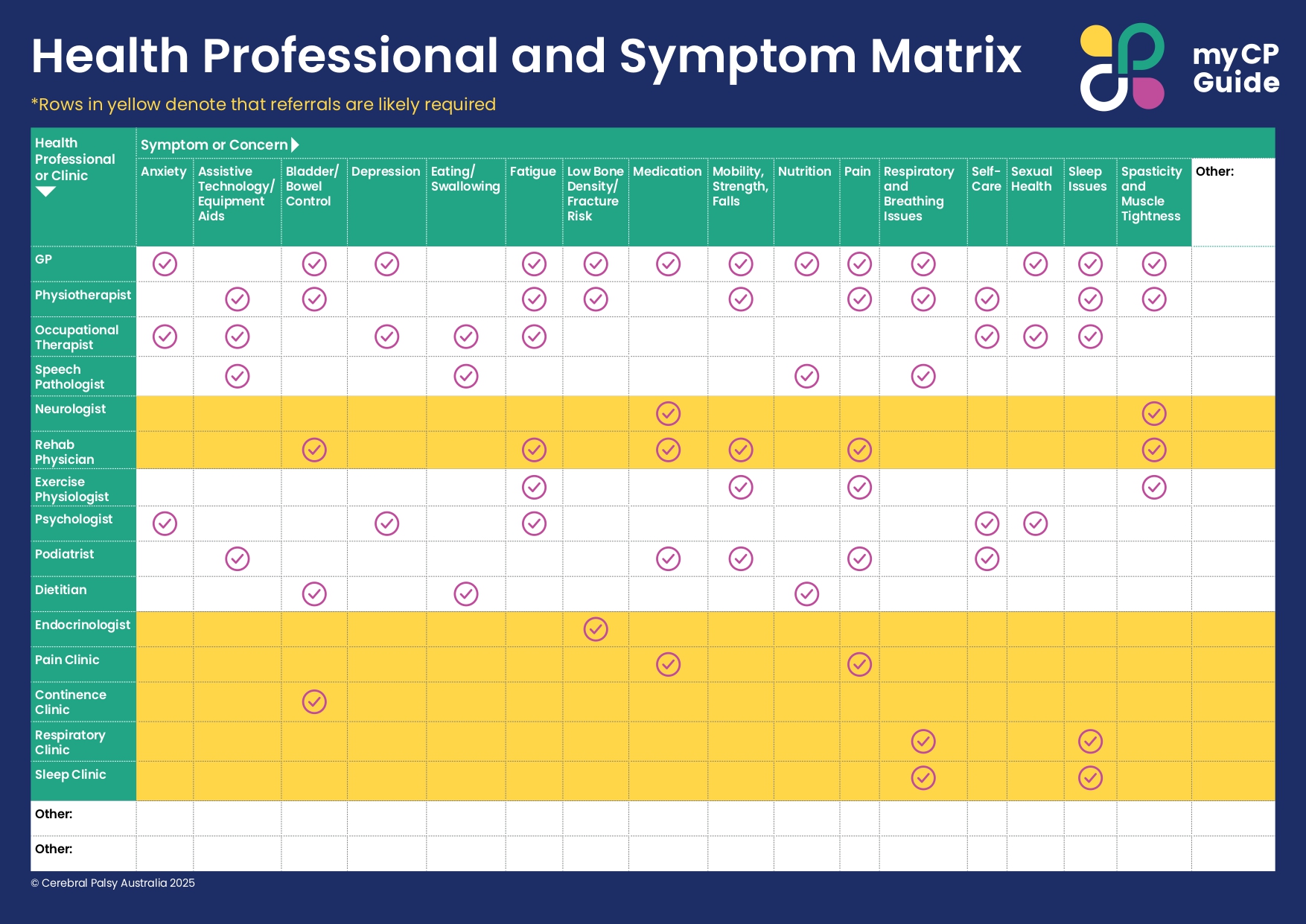
One of the most important aspects that people report is wanting to understand what their health looks like and where to go for support. My CP Guide has worked on a symptom matrix to connect people with the right services for different symptoms.
The matrix was developed in Australia, so professional roles, services and referral pathways may differ in Aotearoa New Zealand. However, it does provide a useful starting point for conversations.
Using the My CP Guide Symptom Matrix
The My CP Guide Health Professionals and Symptom Matrix is a practical resource for adults with CP. It links common changes and symptoms with health professionals who may be able to provide assessment, advice or support.
You could use the matrix to:
- Identify and describe changes you have noticed
- Consider how different symptoms might be connected
- Find out which health professionals may be able to help
- Prepare questions for your GP or healthcare team
- Support a request for further assessment or referral.
Preparing for an appointment
Before an appointment, it may help to record:
- What has changed and when you first noticed it
- Whether the change is occasional, frequent or becoming more noticeable
- How it affects your comfort, independence, safety or participation
- What you have already tried and whether it helped.
Where possible, give practical examples. Saying, “I now need two days to recover after working” or “I have fallen three times this month” may communicate the impact more clearly than saying you feel “more tired” or “less steady”.
The matrix is a guide, not a diagnostic tool, and it does not include every possible symptom or professional. New or changing symptoms should not automatically be attributed to CP or ageing. A GP or other health professional can investigate other possible causes and help coordinate appropriate support.
You know your body and usual routines best. Noticing changes and raising them early is a practical part of protecting your health, independence and quality of life throughout adulthood.
* Amy Hogan is the Cerebral Palsy Society’s Researcher and Member Support Advisor.
