
NEWS & UPDATES
Swallowing impairments – More than just picky eating
31 Aug 2026
Swallowing impairment is common in people who live with Cerebral Palsy. Proper swallowing rehabilitation and early intervention can help.
By Alvis Foong – Speech-language Therapist
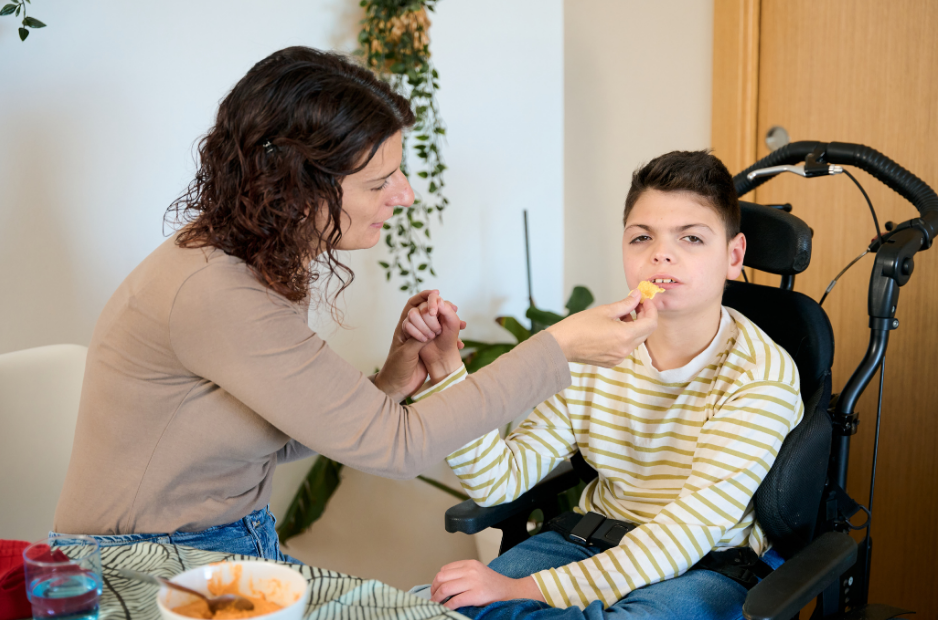
Swallowing impairment, or dysphagia (dis-fey-jee-uh) is a condition that prevents food and liquid from being safely and efficiently transferred from the mouth to the stomach (Logemann, 1995).
This includes challenges breaking down food particles, transferring food from the mouth to the throat, and trouble pushing food down the throat.
Swallowing is a complex process. It was once understood to be a primitive reflex, that was governed by a single location in the brain – the brainstem. Today, it is understood that swallowing involves a network of brain regions that work together to coordinate this complex muscle movement.
Typical swallowing consists of four stages:
- Pre-oral Phase
– Recognising food and drinks by sight and smell
– Bringing food to the mouth efficiently (e.g., using cutlery). - Oral Phase
– Efficient jaw and tongue movement to break food particles down into a small, rounded mass of chewed food ready to be swallowed
– Moving chewed food from the mouth to the throat promptly - Pharyngeal Phase
– Highly-skilled muscle movements to transfer food from the throat to the opening of oesophageal tube - Oesophageal Phase
– The smooth movement of chewed food travelling to the stomach.
Interruption of any brain regions involved in these stages can result in dysphagia. This explains why swallowing impairment is common among people with Cerebral Palsy – Hōkai Nukurangi, whose neurological condition is linked to an injury to the developing brain.
Dysphagia in Cerebral Palsy
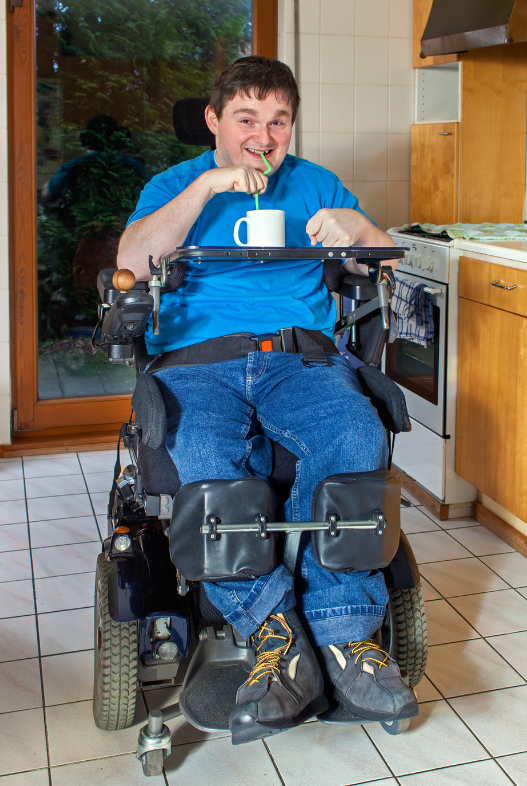
Literature has shown that approximately 8 in every 10 people living with CP experience dysphagia.
This disorder is linked to damage to the neural communication pathway between the brain and the muscle activation for swallowing.
This can result in either increased muscle tension (hypertonic) or reduced muscle strength (hypotonic).
Consequently, people with CP may experience challenges across different stages of swallowing (e.g., chewing and breaking food down in the mouth), posing significant risk to swallowing safety.
These are the common signs if an individual with CP is experiencing dysphagia:
- Excessive drooling of saliva
- Significant food residue in the mouth
- Constant coughing before, during, and after mealtime
- Feeling a lump in the throat
- Effortful to swallow/push food down the throat
- Heartburn
- Weight loss.
Without receiving proper swallowing intervention, people living with CP may suffer from direct impacts such as:
- Choking
- Developing chest infections when food and drinks enter the lungs
Reduced food consumption may result in indirect impacts such as:
- Calorie deficits
- Reduced energy and muscular mass
- Reduced growth
- Dehydration
- Malnutrition
- Weakened immunity
- Reduced quality of life.

Over time, the impact of a swallowing impairment may extend beyond the individual to their caregivers. Without sufficient support from health professionals, caregivers are at risk of mental distress when supporting someone with feeding challenges.
However, swallowing impairment often remains undiagnosed in people with CP. This results in people missing the opportunity for early intervention and engaging in preventative swallowing intervention for a better prognosis.
If you, or your loved one, are having difficulty with eating and drinking, talk to a speech-language therapist.
A speech-language therapist may offer:
- Swallowing screening
- Comprehensive swallowing assessment for safety and efficiency
- Swallowing intervention, including both rehabilitation and prescription of compensatory strategies
- Advice and support on managing long-term swallowing impairment.
Finding a Speech-language Therapist
- Talk to your GP to learn about the speech-language therapists in your area
- Use the “Find a Therapist” directory on the New Zealand Speech-language Therapists’ Association (NZSTA) website to locate a speech-language therapist near you. Go to: speechtherapy.org.nz/find-a-therapist

Tips while waiting for a speech-language therapy appointment
- Keep a logbook to record any signs and symptoms of swallowing difficulties or discomfort (e.g., coughing). Note how often they occur and whether they are more frequent at certain times of the day (e.g., in the morning). Show the logbook to your speech-language therapist.
- Ensure an upright siting position during meals and drinks
- Maintain good oral hygiene. E.g., brushing teeth regularly before and after meals
- Contact your GP if swallowing difficulties worsen.
Final message from a speech-language therapist
- Proper swallowing rehabilitation is imperative for people with CP experiencing swallowing impairment. It will help ensure they have sufficient energy to engage in other rehabilitation programmes.
- Early intervention promotes better recovery, reduces the risk of further health complications, and maintains the enjoyment of life.
- Connect with your GP or speech-language therapist to get information to support you or your loved one with their swallowing impairment.
* Physiotherapists and occupational therapists can also help support people living with swallowing impairment.

* Alvis Foong PhD(Speech and Language), BSLP(Hons), RMNZSTA is a Speech-language Therapist at Habit Health Dunedin. alvis.foong@habit.health
For more information:
Melanie Louden
Communications Manager
melanie@cpsociety.org.nz
Mobile: 022 087 819
