

Our Members - Their Stories
A moving experience – life after independent living
23 Mar 2026
Cerebral Palsy Society member and Christchurch resident, Allison Franklin, writes about moving from living in her own home to residential care.
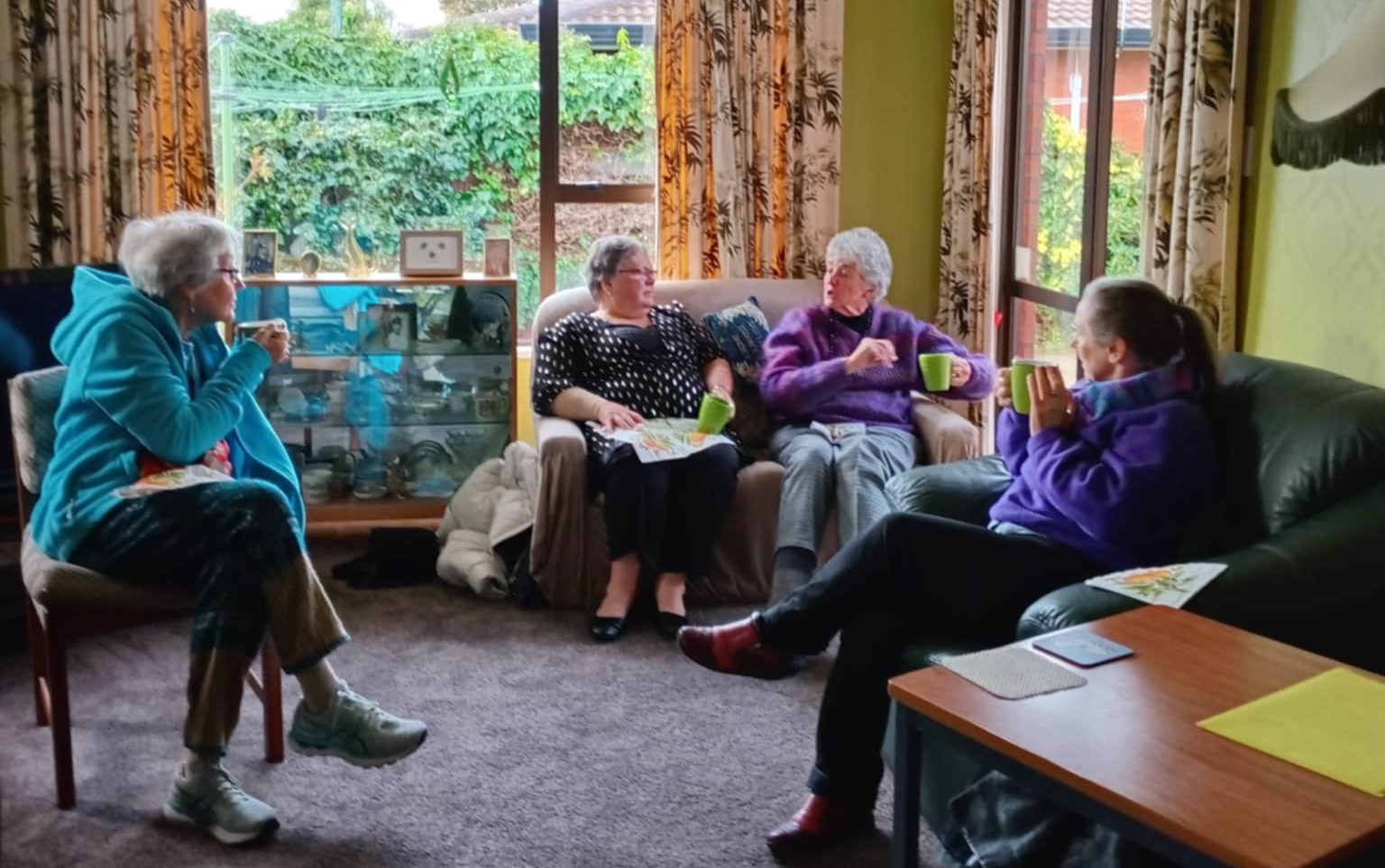
Allison Franklin enjoyed hosting friends when she lived on her own.
By Allison Franklin
Although I was born with cerebral palsy, I consider myself to have had a very good life. I’ve had some interesting jobs, been involved in community groups working in disability advocacy and awareness, worked in the health and disability sectors, and known some truly amazing people. One thing that was important to me from my early years was my independence.
I left home at 20, moving from Christchurch to Wellington for work. Initially boarding, I soon went flatting and when I returned to Christchurch 19 months later, I was clear to my parents that I wouldn’t live at “home” again. Having established that I could take care of myself, they accepted this.
My father, concerned for my future, set about selling the family home and buying a new two-bedroom townhouse that would become mine upon his death. So it was that at the age of nearly 31, I became a mortgage-free homeowner.
The house was ideal for my needs, and with the support of my brother Mark – who did practical care and maintenance of the property and my vehicles – I lived there very happily for 35 years.
Changing needs
As research on CP and ageing by CP Society researcher Amy Hogan has clearly shown, we age quicker than non-disabled people, and in the past few years I noticed significant deterioration in my balance and energy levels.
It became harder just to do the basic domestic chores. Grocery shopping and cooking became arduous; washing dishes, which I’ve always enjoyed, was hard work.
I went out socially less often and so became more isolated.
I had some significant falls.
Living independently and alone was losing its appeal.
When I had friends staying or home help (which had decreased from two hours a week to one and a half) I noticed how much easier things were. Over a period of about a year, I decided it was time to look at residential care options.
I was 66, so knew I was eligible for aged care. My GP referred me to Older Persons Health for a needs assessment.
They saw CP and promptly sent it on to the disability NASC. I received a phone call from a coordinator there who tried to tell me that because I had a disability I was not eligible for aged care.
I told her she was wrong – I’ve known plenty – and rang Older Persons Health. The assessor had expressed concern that I was quite “young” for aged care.
I explained that I’d had a lot of experience with older people, my mother and older sisters had all spent years in care, and I’d had a wonderful neighbour, and another close friend, who had both got to 92. So I knew what I was in for.
Finding the right facility
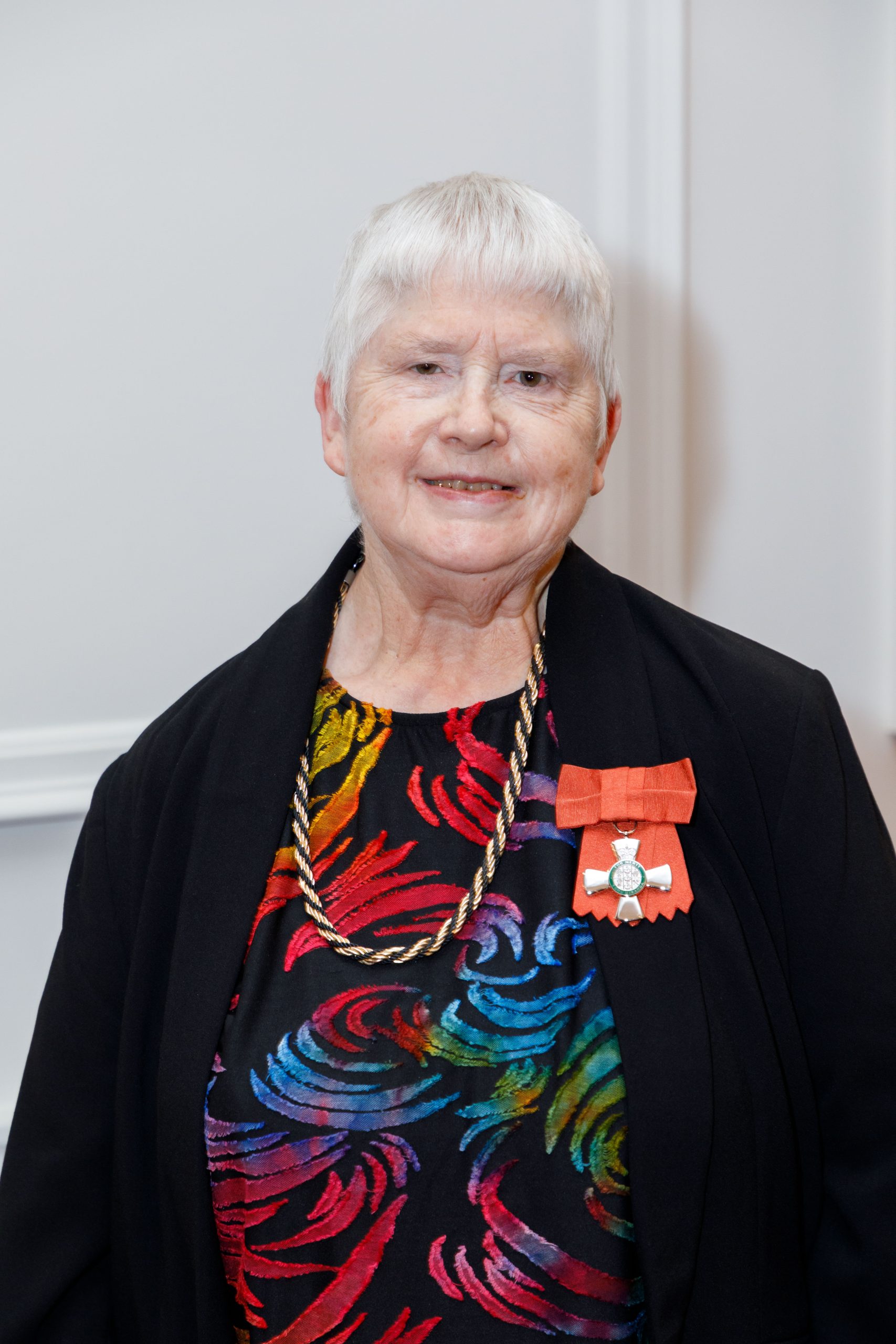
The next stage was finding the right facility.
I was keen to stay in Papanui, where I’d lived for most of my life. A retirement village had been built on land which had been a paddock behind our family home.
For a while I had the romantic notion of living out my last days almost where I’d lived my first 20 years. But when I went to view it, the rooms were too small and at 30 years old it was quite dated.
I had been visiting my friend Dorothy at The Bellevue, a facility built about 5 years ago. Light and modern, it feels quite like a hotel! I met with the sales manager Emma, then came back with my brother Mark. A second pair of eyes and another opinion is always useful.
Emma showed us about five care suites, all differently configured with different outlooks. By the time we got to the last one, I was somewhat disoriented, having walked around the whole complex.
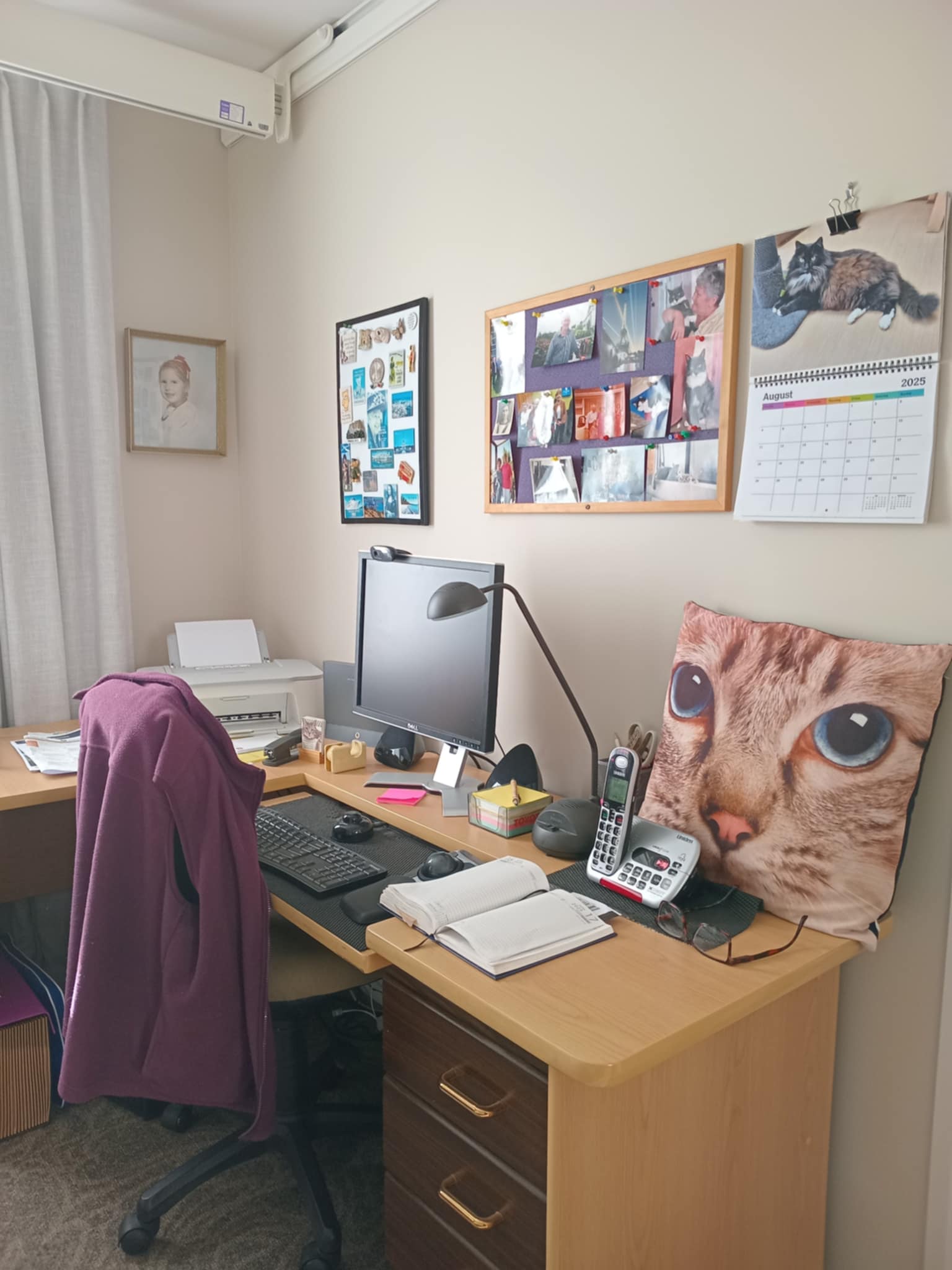
I liked the last one best. There was a good-sized living area with a kitchen bench, cupboards and a small fridge. The en suite was very flash and big enough to accommodate a walker. But the best thing was the large bedroom, the biggest we’d seen. I was very keen to keep my large computer desk, and I knew straight away it would fit neatly into a corner of this room.
Then Emma said “if you’re in here, you’ll be Dorothy’s neighbour”. I hadn’t realised we’d gone in a circle, and yes Dorothy was in the next room.
The living area has a bi-fold sliding door that opens on to an attractive internal courtyard. Naturally, being the largest care suite, it was the most expensive to buy into.
Had I been on my own, I may have worried about spending top dollar. I said to Mark “what do you think?”. He said, “go for the best”. So I did!
I had told the retirement home that I had a car and a mobility scooter. Parking the car in the car park which has gates locked at 5.30pm was no problem. Electronic number plate recognition technology allows residents and designated family etc to come and go at any time. But the mobility scooter was seen as a “sticking point”.
Emma told me that only people in the independent living apartments had scooters, rest home residents didn’t.
This seemed counter-intuitive to me. I’d had my scooter for seven years and enjoyed getting out on it in fine weather.
As I age, I’m more likely to give up driving my car, at which point my scooter would become more important as an independent method of transport.
I wrote an email, with a photo of the scooter attached, outlining why I needed it and my rights to do so. I cited the Human Rights Act, the Disability Strategy and the Nursing Home Code of Residents’ Rights. Emma flicked it on to head office who responded within an hour saying, “of course Allison should keep her scooter”.
It may have helped that I added MNZM to my name, an honour I’d acquired only about a week earlier at King’s Birthday, very timely! A week after being told that I “couldn’t possibly” use the Apartments scooter bay, Emma and the facility manager were showing me where it was and checking to see if it was suitable for me. It was.
Moving day
The actual move went very smoothly.
My brother, nephew and great-nephew did the man-handling and everything was done in an hour or so.
A nurse came in while Mark was assembling my computer desk and started asking him about my care needs. I was standing right there! Mark had to keep saying “ask Allison…talk to Allison”. I was both amused and annoyed.
I explained that I’d lived alone until now, which seemed to surprise her. It’s been a recurring theme since.
A nominated EPA (Enduring Power of Attorney) has to be specified on admission. But although Mark is appointed with my lawyer in the event of it being necessary for someone to handle my affairs on my behalf, currently this is not invoked because I am of sound mind. I’ve had trouble at times convincing staff of this!
When it came to meals, I found these could be delivered to my suite.
Early on, I tried eating in the dining room a few times, but it wasn’t successful. I’m a messy eater, and am a bit self-conscious about that with people I don’t know.
Some residents at my table stared at me. There was no conversation.
I decided that I’d be better off eating in my suite where I can listen to the radio or watch TV.
In the evening I can quaff a glass of wine if I feel like one. I brought my stick vacuum cleaner with me (which is hidden discreetly behind a curtain) and can clean up any mess if the cleaner isn’t due.
The suite is cleaned daily. I have my own cutlery (I use a spork a lot) and some bowls and plates, so I still do a few of my own dishes, but far fewer than I had to before.
CP-related challenges
There are some CP-related challenges to being in care.
I constantly have to explain that I have unsteady hands so cannot carry or hold a full glass or cup. I need some food cut up, toast prepared with toppings, etc.
Communication with new staff can sometimes be difficult – a combination of my less-than-perfect speech and them having English as a second language. This can be frustrating, but improves as we get to know each other.
After many years of living alone it took some time to get used to people coming in and out all day.
There are care assistants who deliver meals, make my bed, cleaners, the daily menu to select the following day’s selections and several other people for various reasons.
I’m certainly not lonely anymore!
The good thing is if I need any kind of assistance, it’s only a bell ring away. I still try to be as independent as possible, but it’s nice knowing help is available if required.
Having a nurse available 24/7 is good too if I need a wound dressing or any other medical care. I still choose to administer my own medication, and will do so as long as I am able to.
The art of downsizing
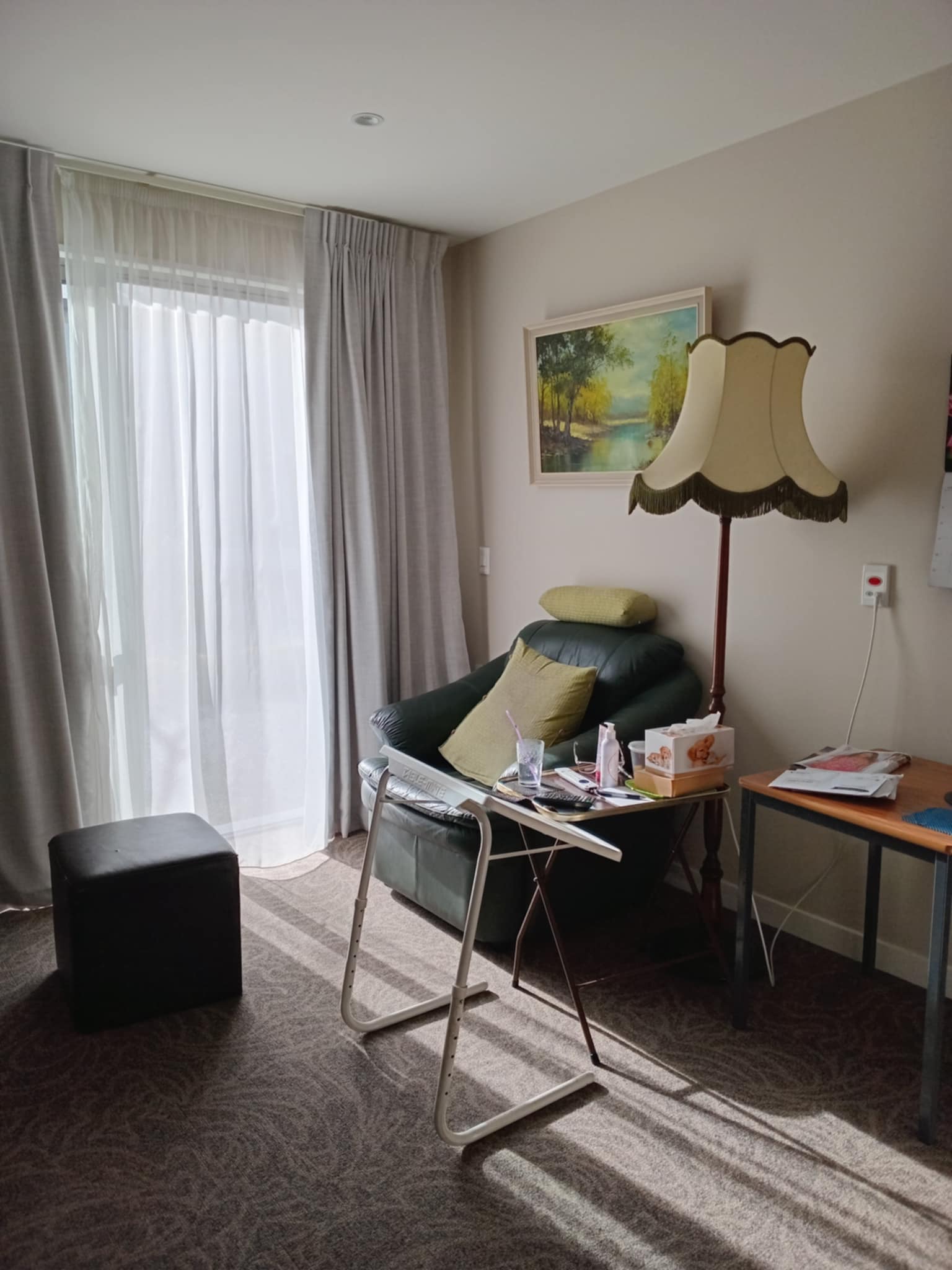 I had begun down-sizing in 2024, it’s amazing how much stuff can be accumulated in 35 years!
It’s a long, arduous and somewhat emotional process. I basically had to part with about 90 percent of my possessions, some of which had fond memories attached. My advice to anyone thinking of moving in the next few years is to start this process NOW!
Having been very independent in my adult life, some people have been quite surprised or shocked to hear that I’ve gone “into care”. I think it’s all about timing.
If I’d waited until I literally couldn’t cope on my own any longer, my experience could have been very different. My advice is to be realistic, plan ahead and think about what care option is right for you. I was fortunate that I had a house to sell which gave me options.
I am glad that I made the move when I did. I now have more energy to enjoy my social life. I am safer both in terms of falling and in a security sense. I have less worries about day-to-day matters and don’t have to worry about care givers not turning up…they’re here!
This article was originally published in the March 2026 edition of The Review magazine.
For more information:
Melanie Louden
Communications Manager
melanie@cpsociety.org.nz
Mobile: 022 087 819
