

NEWS & UPDATES
Living with Cerebral Palsy: Managing falls and balance challenges
27 Nov 2025
By Amy Hogan and Peter Rawlings
Falling is something many people with Cerebral Palsy (CP) – Hōkai Nukurangi know all too well. Whether you walk, use sticks, a walker, or a wheelchair, balance and stability can be unpredictable companions. Sometimes falls happen in public; sometimes they happen quietly at home. Each one is unique, a mixture of physical reality, emotional impact, and the social responses that follow.
While we can’t always prevent falls, we can try to minimise inadvertent damage, recover safely, and rebuild confidence afterwards. This article looks at four key areas: general safety, communicating with others, common-sense prevention, and restoring confidence when fear creeps in.
Understanding why falls happen
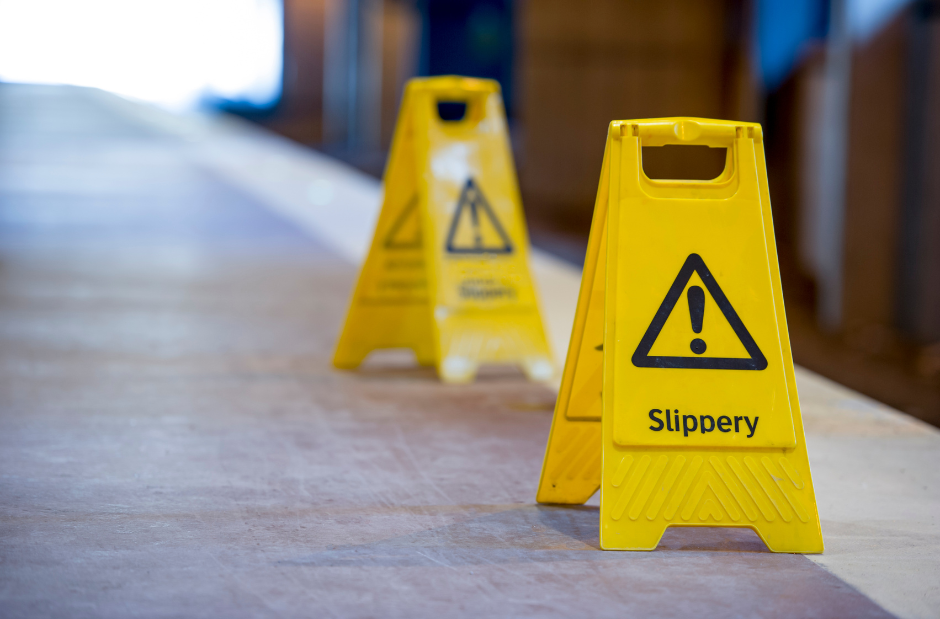
CP affects the way our brains communicate with our muscles. Muscle tone, coordination, and fatigue can all play a part in balance and movement. Add in slippery floors, uneven pavements, or a sudden gust of wind, and it’s easy to see how quickly a fall can happen.
Even with the best preparation, falls are part of life for many of us. For people who walk, uneven ground, fatigue, or quick turns can trigger imbalance. For wheelchair users, especially those using manual chairs outdoors, obstacles like potholes or steep slopes can lead to a topple. Power chair users may experience similar risks, particularly on curbs or gradients. Understanding your specific risks is the first step to managing them.
General safety: Practical steps for everyday life
At home
- Clear pathways: Keep walkways free of cords, loose rugs, and clutter.
- Outdoor spaces: Good maintenance of outside, garden/entrance pathways and decks is also important, e.g. repairs to damaged/worn areas, cleaning to remove moss, mould, lichen and algae that can cause a slip hazard, leaves on paths, foliage growing over a path.
- Lighting: Good lighting makes a huge difference — especially at night or in shared spaces. There are a number of relatively inexpensive sensor lights and fixtures that can work to eliminate dim areas.
- Non-slip mats: In the kitchen and bathroom, non-slip mats or textured flooring can reduce risk. Not all mats are created equal. It’s a good idea to look at reviews or talk to people in retail stores about your specific needs. People like ILS (Independent Living Service) can provide insights.
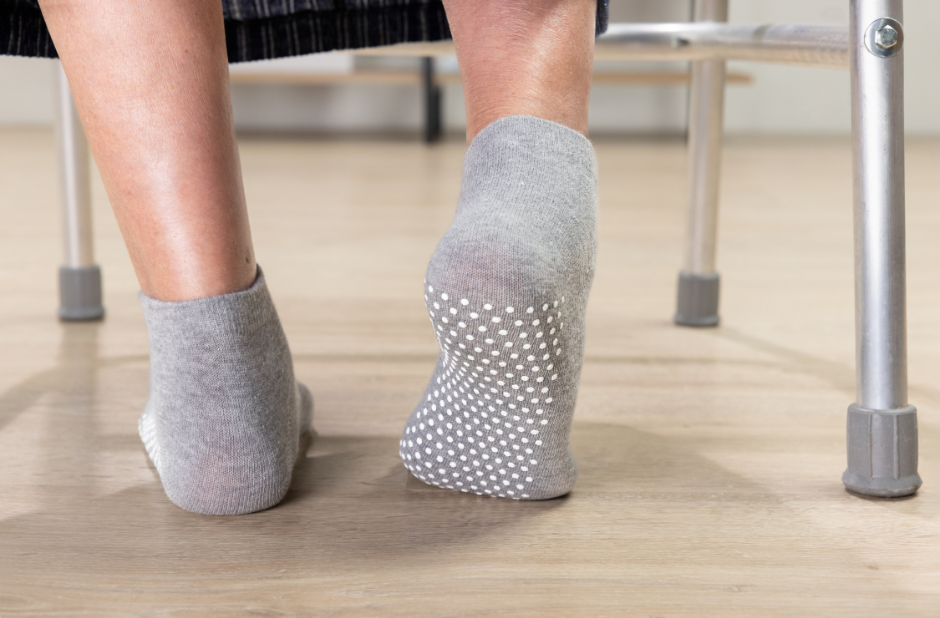
- Non-slip/grip socks: These provide extra grip on hard surfaces including timber, lino and tiles. They are designed to aid in fall prevention and are commonly used in hospitals and rest homes and by elderly and vulnerable people in their own homes who are prone to falling.
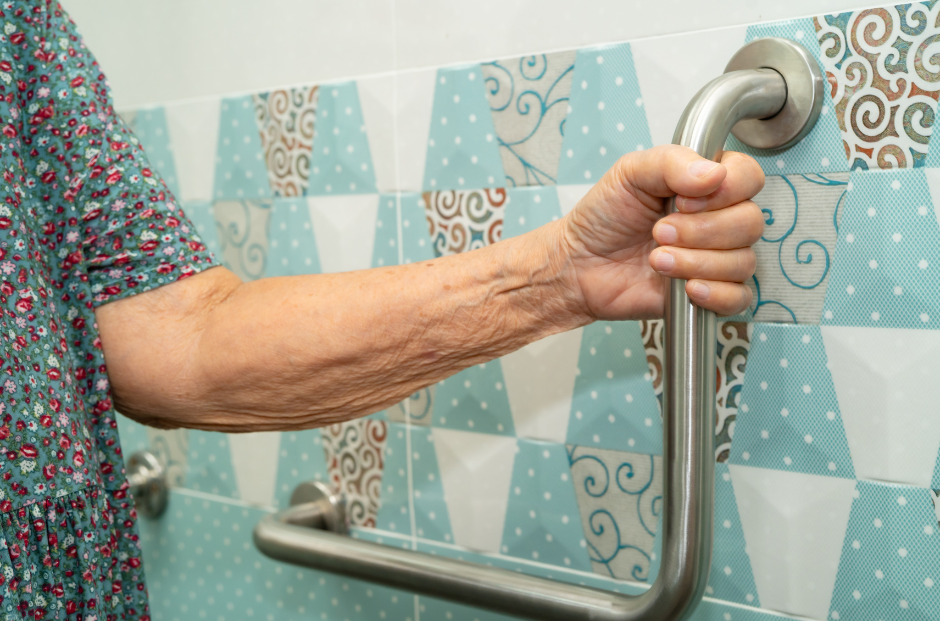
- Grab rails: Consider installing rails in key places like beside the bed, shower, and toilet. Again, rails can vary in quality and strength. Generally speaking, it’s a good idea to have specific grab rails that have been installed and tested. Other bathroom fixtures, such as towel rails, may buckle under the weight.
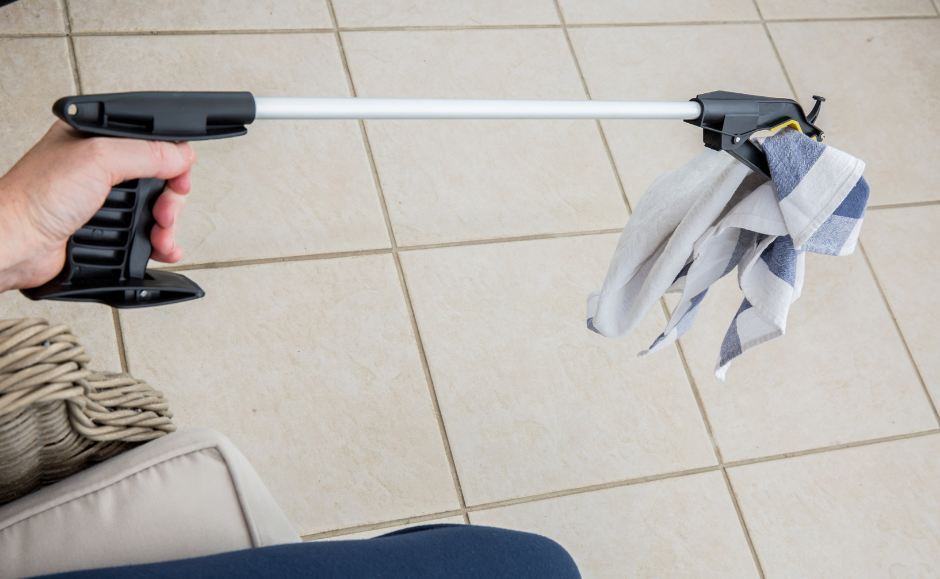
- Assistive technology: Simple tools such as reachers, dressing aids, or steadying poles (like floor-to-ceiling rails) can help reduce risky movements.
- Everyday items: Fixtures and objects that you use daily can take a lot of wear and increase risks for falls. The classic example is the toilet seat, which may not have sturdy hinges. When it needs replacing, consider ones with multiple fix points. It can be more expensive but longer-lasting as well. Making sure that the everyday items, such as toilets, are at a good height, or at least a manageable one for you, reduces fall risk.
Out and about
- Plan ahead: Think about the surfaces, weather, and crowds. Even familiar routes can change — construction zones, new curbs, or resurfacing can catch anyone out.
- Shoes and tyres: Supportive, non-slip shoes matter as much as well-maintained wheelchair tyres or caster wheels.
- Take your time: Slowing down and giving yourself permission not to rush reduces risk more than any gadget ever could.
Emergency planning
If you live alone, consider a personal alarm or fall detector. Some smartwatches and emergency pendants can automatically alert a contact if you fall.
Others prefer to keep a small phone or communication device within reach at all times. Think through what you’d do if you fell and couldn’t get up — having a plan can ease anxiety. It’s also important to have an idea of who has access to your home in the event of an emergency, such as caregivers having spare keys or letting a friend or family member know where a spare key is kept.
When you fall: Communicating with caregivers and the public
A fall can be distressing, not just physically but emotionally. It’s natural to feel embarrassed or exposed, especially if it happens in public. Many of us with CP find that how others respond can be just as impactful as the fall itself.
What to tell caregivers or bystanders
If you fall and need help, you can guide people through what’s actually helpful. A few key points to communicate, either in advance to those close to you or in the moment if you can, include:
- “Ask before you touch.”
People often rush to help, but sudden grabbing can make things worse. A simple “Are you okay?” or “How can I help?” goes a long way. - “I need a moment to assess.”
After a fall, take a few deep breaths. Check whether anything feels sharp, hot, or wrong. People with CP sometimes take longer to register pain or fatigue. - “Here’s how to help me up.”
Explain if you prefer to use a chair, a grab rail, or a particular method to get upright. If you use a wheelchair, tell helpers whether to move the chair closer or hold it steady and make sure the brakes are on fully. - “It hurts here.”
Clearly identifying what hurts helps both you and any helper avoid making it worse. If you suspect a serious injury, stay where you are and seek medical help rather than pushing through pain. - Sensitive areas.
Some parts of the body (hips, shoulders, or joints affected by tone and spasticity) may be more vulnerable. Let people know if a certain area should not be pulled or pressed on.
Have this conversation early
If you live with family, personal assistants, or support workers, it helps to have the “what if I fall” talk before it happens. Together, you can agree on signals, safe words, or routines. Some people even keep a small “help me up” card explaining what to do — particularly useful if you’re non-verbal, fatigued, or in a public place.
Common-sense ways to reduce falls and wheelchair topples
You don’t have to eliminate every risk to live well — but there are small, cumulative habits that make a big difference.
For people who walk (with or without aids)
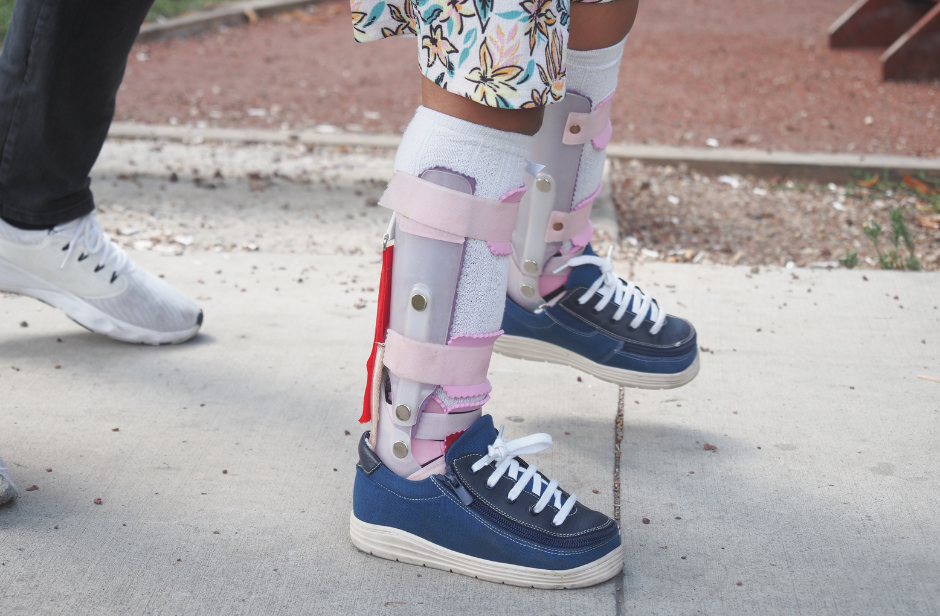
- Use what works, not what looks good. It’s easy to feel self-conscious about walking sticks or walkers, but using the right support keeps you moving for longer, e.g. correct height for walking stick or walker handles. Also, purchase equipment from reputable suppliers to ensure the product is fit for purpose.
- Make sure to have good tread. For walking sticks and crutches, it is essential that the rubber ferrule on the base is not worn. Check regularly and replace as needed.
- Mind the transitions. Getting up from low chairs or changing surfaces (like carpet to tile) can throw off balance. Pause and re-centre before stepping forward.
- Strength and flexibility. Gentle stretching or physio-led exercise can improve balance. Focus on what’s sustainable, not extreme.
- Avoid multitasking. Looking at your phone while walking can increase the risk more than you’d think, as well as listening on headphones. Doing this can generally be okay for familiar routes, but in bad weather or new environments, paying attention to the environment can be important.
- Fatigue management. Tired muscles lose coordination. If you feel “off balance,” rest before continuing.
For manual wheelchair users

- Check terrain and weather. Slopes, uneven paths, or wet leaves are common culprits.
- Be mindful of temporary access structures. Keep an eye out for curb ramps, especially temporary ones, where roading/construction work is in progress. These temporary ramps may be springy and can lead to a loss of balance. Also, steep curb ramps can result in a wheelchair becoming stuck at the bottom of the ramp in the roadway.
- Know your tipping point. Practice safe wheelies and tipping recovery with a therapist if possible — understanding your chair’s balance can prevent flips.
- Use anti-tips wisely. They can be lifesavers on steep slopes or unfamiliar ground.
- Secure items. Bags or heavy items hung on the back of your chair can shift your centre of gravity.
For power wheelchair users
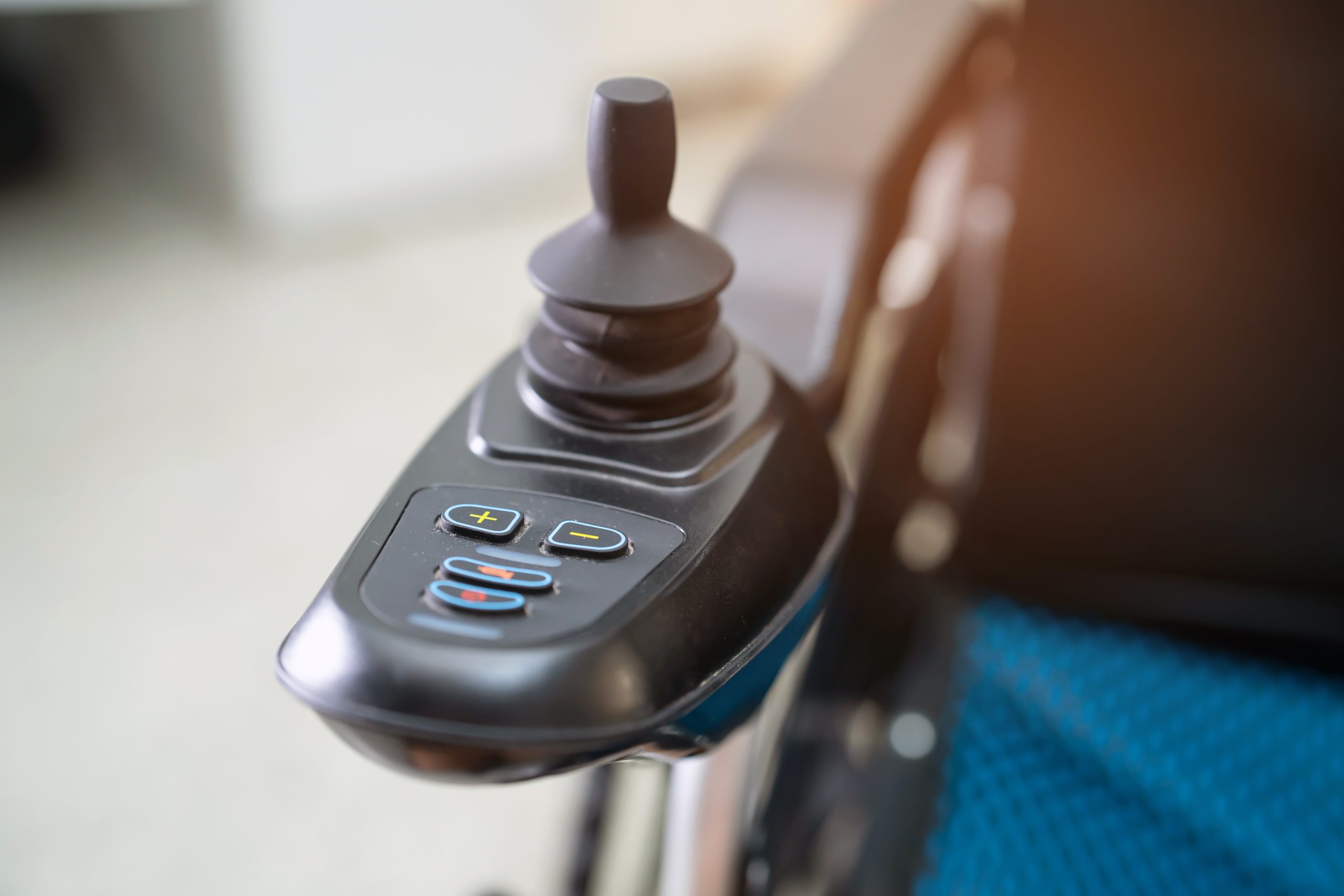
With the evolution of power attachments and e-motion wheels, what we consider to be a powerchair is changing. People who were once using purely manual power or being pushed can now have the option of power-assist, which can require looking out for additional hazards that the momentum and speed can produce.
- Slow down on slopes, curbs, corners and sharp curves. Sudden direction changes can destabilise/shift the centre of gravity of heavy chairs.
- Check suspension and batteries. Poorly charged batteries or uneven tyres affect stability.
- Stay alert to the environment. Watch for loose gravel, narrow paths, or hidden drops.
- Be wary of potholes. Potholes in footpaths can be a hazard for smaller powerchair wheels, including drain and utility service covers that are not flush with the footpath surface.
In vehicles and transfers
- Always lock the brakes before transferring.
- Use consistent routines. Repetition helps your body predict movement.
- Communicate with helpers. Count together before lifting or shifting.
The emotional side of falling: Fear, embarrassment, and confidence
A fall doesn’t just knock you physically — it can shake your confidence too. Fear of falling again can lead people to limit activity, stay home more, or withdraw socially. Over time, that can reduce physical fitness and increase isolation.
Acknowledging the fear
It’s okay to admit that falling is scary. Sometimes the emotional bruises last longer than the physical ones. Talking about it with others who understand — friends, family, or online discussion groups — can help normalise those feelings.
Some people find it useful to debrief with a physiotherapist, occupational therapist, or counsellor. You can discuss what went wrong, identify practical fixes, and set gradual goals for returning to the activities you enjoy.
Small steps to rebuild trust in your body
- Reflect, don’t ruminate. Note what happened factually, without self-blame. “My foot caught on the mat” is a statement, not a judgment.
- Start small. Try short, controlled activities first — walking in a hallway, wheeling in a familiar area, or using parallel bars at physio.
- Celebrate progress. Confidence often grows in increments, not leaps.
- Adjust your environment, not your life. A single fall doesn’t mean you need to give up independence.
Public falls and emotional recovery
Falling in public can feel humiliating, especially when strangers react awkwardly or overhelp. Remember that people’s reactions often come from panic or not knowing what to do. It doesn’t mean you did anything wrong.
If this happens, try to focus on regaining control of the moment: direct people calmly (“Please pass me my chair”), thank them briefly, and move on when you’re ready. Later, you can unpack the emotions with someone you trust.
Supporting each other
Falls are a shared experience across the CP community. Talking about them — rather than hiding them — helps break down stigma. Sometimes help is needed but that doesn’t take away your independence. It’s part of living authentically with CP.
Family members and support workers can also benefit from open conversations. They often fear “doing it wrong” or “hurting you,” which can make them hesitate at the wrong moment. Sharing your preferences, demonstrating safe techniques, or practising together can give everyone confidence.
When to seek medical advice
Not every fall requires a doctor’s visit, but some do. Seek medical care if you:
- Hit your head or lose consciousness
- Experience new or severe pain, swelling, or bruising
- Notice sudden changes in mobility or muscle tone
- Have repeated falls in a short period.

Your GP or physiotherapist may suggest a falls assessment, which looks at strength, balance, vision, medication side effects, and equipment setup. If you use mobility aids, they can also check whether adjustments are needed.
For wheelchair users, a seating review every couple of years helps ensure posture and positioning remain optimal for stability and comfort.
Building confidence through practice and community
Many people find reassurance in practicing safe fall recovery. Physiotherapists or rehabilitation centres can teach techniques for:
- Getting up safely from the floor
- Moving to a stable surface or chair
- Protecting vulnerable joints during a fall.
If available in your region, ask your local rehab service or Allied Health Centre about fall recovery sessions for adults with neurological conditions. Some community physios or gyms offer tailored strength and balance classes under the Live Stronger for Longer initiative.
There may be an opportunity to report a hazard directly to your local council if there was a clear reason for your fall and if this could be a hazard to others. Most local councils have a mechanism on their website for reporting potential hazards. For example in Auckland, the council page is: Report a problem.
The bigger picture: Living safely, not fearfully
Managing falls is not just about physical safety — it’s about living with confidence and autonomy. Whether you’re walking, rolling, or somewhere in between, your body is doing its best with the information it has. Respecting your limits, pacing your energy, and creating supportive environments allow you to live more freely.
Sometimes, that means saying yes to equipment, home modifications, or personal assistance that make life smoother. Other times, it’s about finding humour in the imperfect moments — the wobbles, the tumbles, and the creative recoveries that only people with CP can truly understand.
As a member once said, “I may fall down, but I always get up — even if it’s in my own way.”
Final thoughts
Falling is not a personal failure. It’s a human experience shaped by body, environment, and emotion. The goal isn’t to never fall again — it’s to fall safely, recover confidently, and keep moving through life on your own terms.
If you have tips, tricks, or experiences that might help others, we’d love to hear from you. The Cerebral Palsy Society is always gathering real-life insights to shape future resources and advocacy.
Useful resources
- Live Stronger for Longer (ACC and Ministry of Health)
- Parent to Parent
- Healthify – search “Falls Prevention”
 |
 |
| * Amy Hogan is the Cerebral Palsy Society’s Researcher and Member Support Advisor. |
* Peter Rawlings is one of the Cerebral Palsy Society’s Member Support and Programme Coordinators. |
