
Our Members - Their Stories
International court action for Maia and Anna
01 Apr 2026
Six players have just returned from the Para Badminton World Championships in Bahrain. Four of the players live with CP and two are CP Society members.
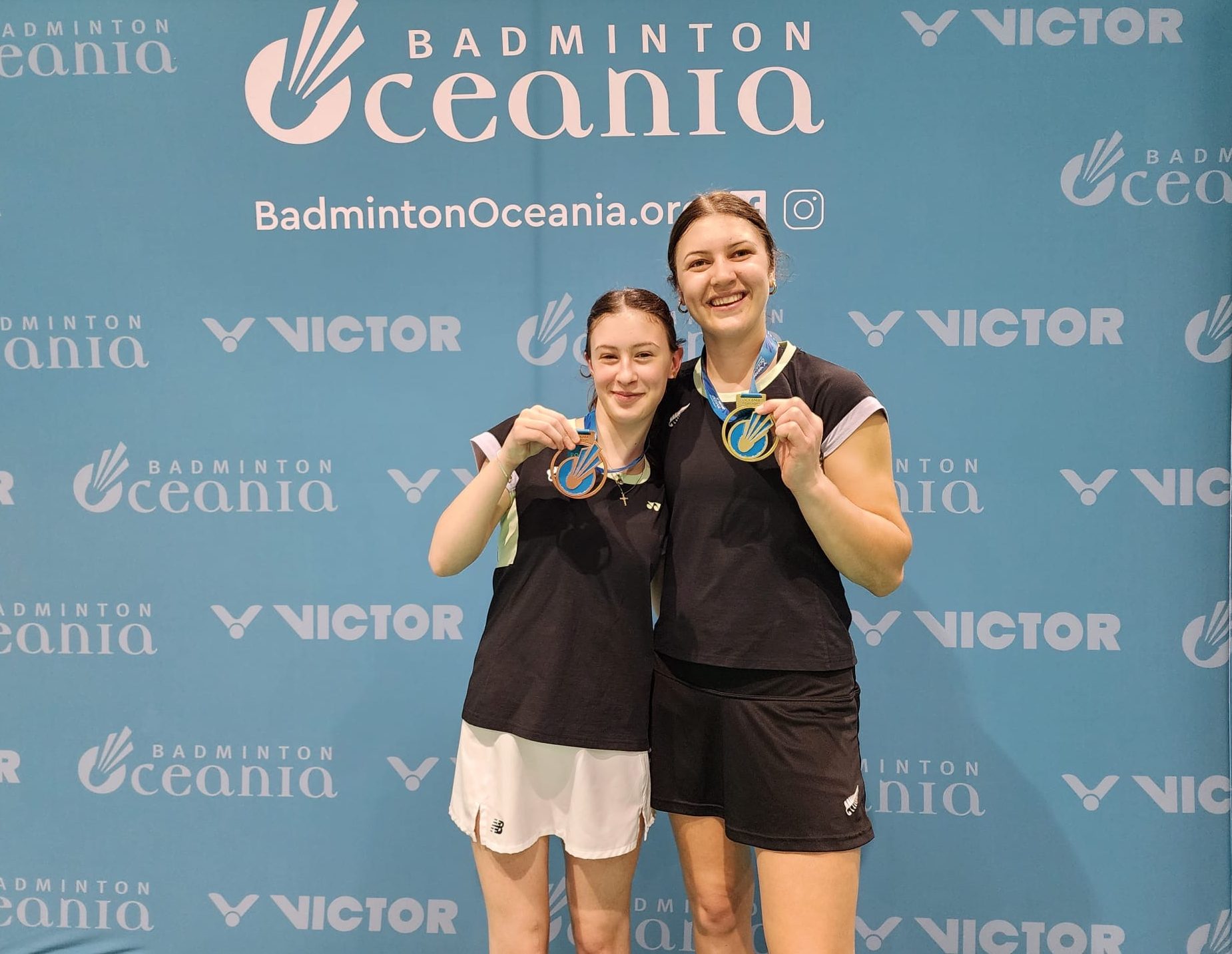
Maia Read, left, and Anna Hika are proud to have represented Aotearoa New Zealand on the international stage.
By Melanie Louden
Commitment, dedication and hard work on the badminton court, and behind the scenes, have paid off for Maia Read and Anna Hika.
The Cerebral Palsy Society members went to Australia in October and brought home three medals each from the VICTOR Oceania Para Badminton Championships and the YONEX Australian Para Badminton International 2025.
The pair were also part of a 6-strong squad that competed in the Para Badminton World Championships in Bahrain from February 8-14.
Maia and Anna, who are doubles partners, were joined by two other players who live with Cerebral Palsy – Hōkai Nukurangi – Andrew Fairweather and Rishikesh Venu, as well as teammates Amy Dunn and Thomas Slade.
For Maia, 18, representing Aotearoa New Zealand “means the world to me”.
“I have a chance to show other young athletes that they are more than capable of doing it too”.
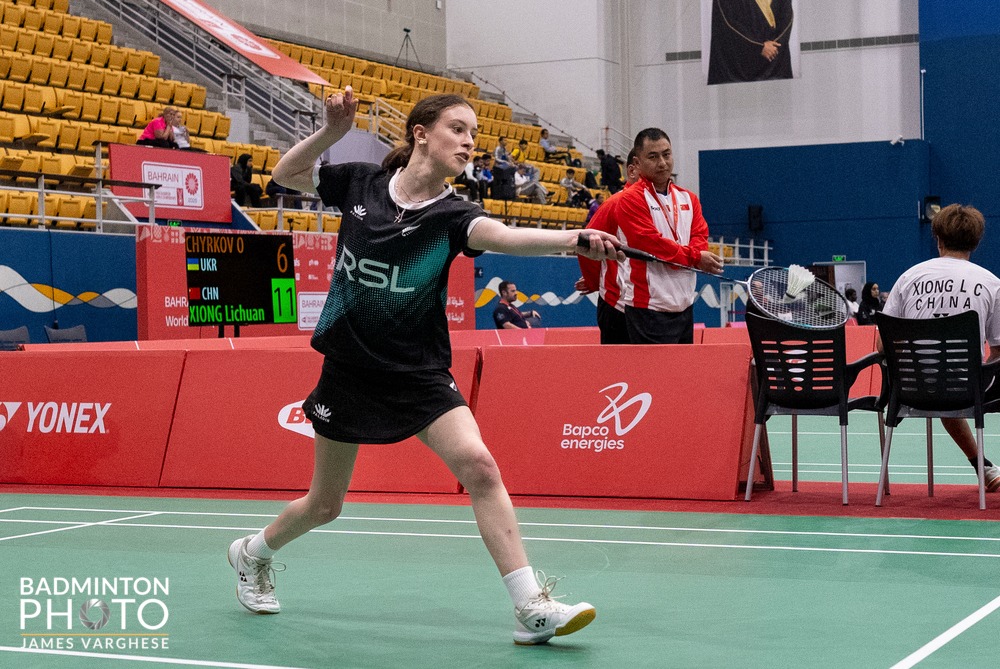
Maia Read is proud of the fact she can show others “they are more than capable”. Photo: James Varghese
Maia likes the fact that badminton challenges her physically and mentally.
“It’s enjoyable because I can really see my progress and feel like I am accomplishing something.”
The New Plymouth resident says competing overseas requires a lot of dedication.
“You have to put in the hours to really make it worthwhile. Extra training to prepare definitely takes a lot of effort. You have to really be willing to put yourself in situations where it’s going to be hard some days.”
Maia’s hard work paid off in the form of three bronze medals won at the Oceanaia and Australian International events held last year.
Cerebral Palsy – Hōkai Nukurangi mainly affects Maia’s right leg – her muscles aren’t as strong on that side and when it comes to playing badminton it impacts her balance and movement.
“My brain doesn’t have complete trust in my body. I want to be further forward or move quicker backwards, but it is like a safety lock comes on.
“I have to work harder at my footwork; the timing and coordination doesn’t come as easily to me as it does to most able-bodied players,” Maia says.
Representing her country is something Anna, 24, is “very proud of”.
“I realise that not everyone gets this opportunity.”
Anna says bringing home gold, silver and bronze medals from the Oceania and Australian International competitions are a huge highlight, but qualifying for the world championships in Bahrain is her biggest badminton achievement to date.
The full-time primary school teacher plays for All Saints Badminton Club in Invercargill and trains two to three hours per week, with extra physical activity between trainings.
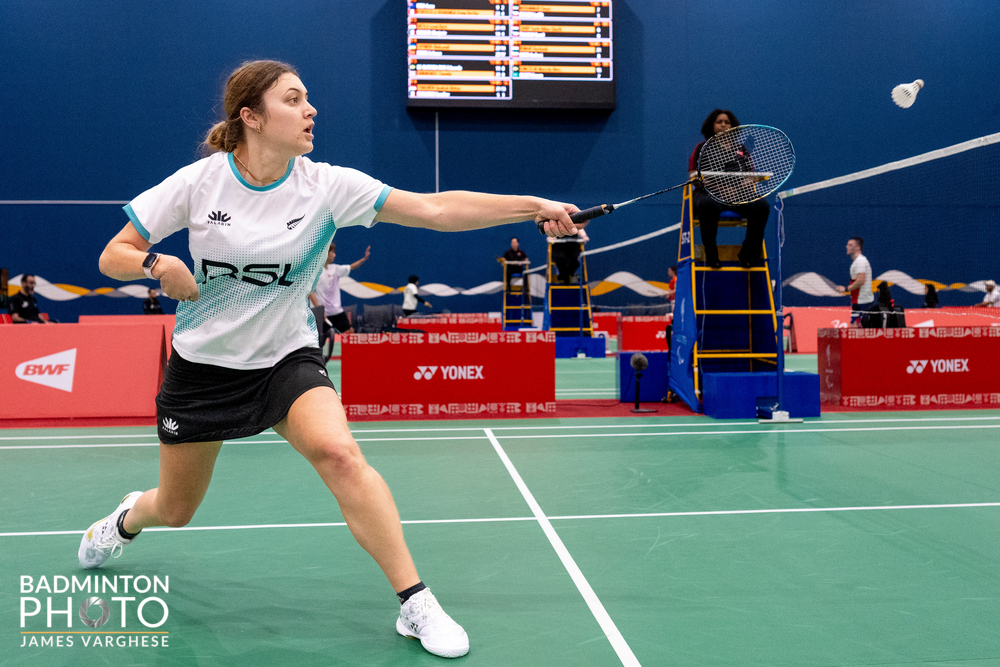
Anna Hika says playing badminton when she can only use one hand comes with challenges. Photo: James Varghese.
Cerebral Palsy – Hōkai Nukurangi affects the entire right side of her body. She is unable to use that hand, and balance and strength is a challenge in that leg.
“One of the main struggles for me when playing is serving with just one hand and also not being able to move as quickly on the court due to my balance and strength.
“The main challenge for me would be having to adapt to everything while only having the ability to use one hand.
“I try not to let anything hold me back and just keep trying to figure out a way to work around it.”
“I like the social side of badminton, especially when it comes to playing and competing in sports, but I also love that it keeps me physically active,” Anna says.
Para badminton, at an international level, is a relatively new sport in Aotearoa New Zealand and there are 13 classified Para badminton athletes.
Badminton New Zealand’s People and Pathways Lead Donna Trow says 2017 saw the country’s first Para player compete internationally, while our first Paralympian took part in Paris 2024.
As well as Cerebral Palsy – Hōkai Nukurangi, Para badminton players live with paraplegia, birth defects, short stature, are amputees and use wheelchairs.
Donna says badminton is a low-impact, non-contact sport making it a great option for people who live with physical disabilities.
Feedback shows there are “positive physical, social, and emotional benefits that participants with disabilities have experienced, such as improved confidence, fitness, and opportunities for social interaction and friendship”.
Donna says they are grateful for the financial and resourcing support that comes from Badminton Oceania which is vital to New Zealand Para Badminton’s players and the programmes they take part in.
For more information go to www.badminton.org.nz
This article was originally published in the March 2026 edition of The Review magazine.
For more information:
Melanie Louden
Communications Manager
melanie@cpsociety.org.nz
Mobile: 022 087 819
